Interview with Professor Chan-ho Kwon
April 22, 2025
[The following is excerpted from an interview with Chan-ho Kwon, former vice president of Sangmyung University in South Korea, conducted by the Seikyo Shimbun and published on April 22, 2025. In the interview, Dr. Kwon reflects on Daisaku Ikeda’s philosophy of peace and the Soka Gakkai’s efforts to promote peace worldwide, as these ideals gain wider resonance in Korean society. (Interviewer: Kiyomi Sawada)]
Seikyo Shimbun: You have spoken at peace forums hosted by Korea SGI (KSGI) and have shown deep empathy and understanding toward the organization. How did you first come to know about KSGI?
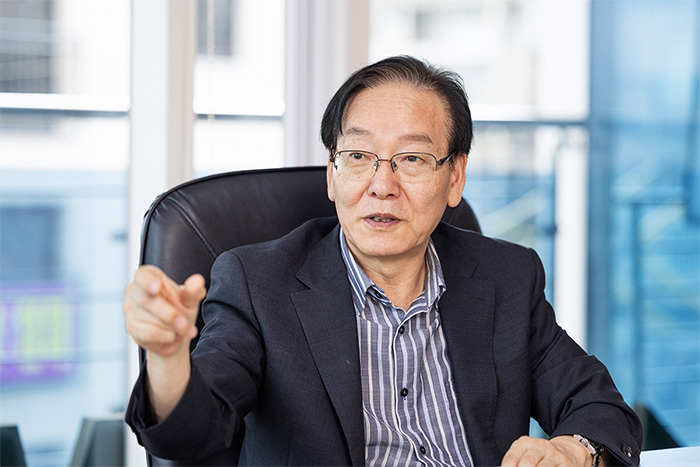
Professor Chan-ho Kwon, former vice president of Sangmyung University, South Korea
Professor Chan-ho Kwon: When I was teaching at Sangmyung University, one of my colleagues was a KSGI member. Through him, I became familiar with the Soka Gakkai and Soka education, and I began reading President Ikeda’s writings.
I was struck by the depth of his scholarship and philosophy, and I was also amazed to learn of his extensive dialogues with leading thinkers worldwide and the many educational and cultural institutions he has established across the globe. It is truly rare for one individual to contribute so broadly to the cause of world peace.
I studied political science at an American university, with a focus on peace studies. Before becoming a professor, I served as a diplomat, traveling widely in the United States and Europe and even visiting North Korea twice.
Perhaps because I often faced pressing issues in my work as a diplomat, my yearning for peace deepened. That is why I was encouraged and inspired by President Ikeda’s words, which were grounded in concrete proposals and consistent actions for peace.
Seikyo: What aspects of Mr. Ikeda’s philosophy particularly impressed you?
Kwon: I would highlight three points. First, that it is grounded in reality. Peace philosophies tend to become abstract, but President Ikeda’s proposals are always concrete and urge us to take action.
Second, his commitment to the United Nations. He consistently emphasized the importance of cooperating with the UN and other international organizations.
Third, his peace philosophy is rooted in Buddhist philosophy that upholds humanism and the dignity of life. I was deeply impressed by his penetrating insight into the essence of war and peace from the perspective of life itself.
Seikyo: In your speech at the peace forum hosted by KSGI, you emphasized humanism rooted in respect for human beings and dialogue as key characteristics of Mr. Ikeda’s philosophy of peace.
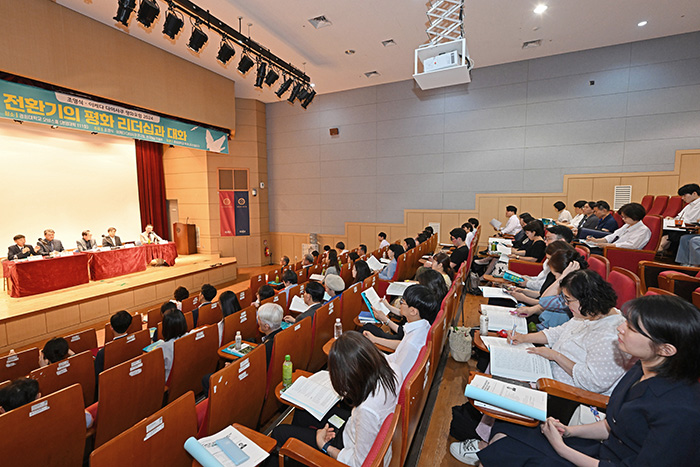
Professor Chan-ho Kwon served as a panelist at a peace forum held at Kyung Hee University in July 2024.
Kwon: Yes. I believe that the central tenet of President Ikeda’s humanism is the conviction that when each individual cultivates a rich humanity, it ultimately contributes to the good of all humankind. This, in turn, requires a firm belief in the dignity of all life.
He stated that “we must never build our own happiness upon the unhappiness of others.” In these words, we can glimpse the depth of his philosophy of pursuing peace grounded in humanism.
President Ikeda consistently respected others as fellow human beings and never treated anyone as a sacrifice. He visited even countries with differing ideologies “because there are people there,” opening his heart and engaging in dialogue with each person, one by one. He asserted that dialogue grounded in humanism is the surest path to peace, and I firmly believe it is precisely this philosophy and these actions that hold the key to building lasting peace.
The Soka Gakkai’s philosophy of coexistence, fostered under the leadership of President Ikeda, has the power to overcome division and build solidarity. I am convinced that the peace movement of Soka, which conveys the most vital principle of respect for human dignity, will continue to have a great impact on the world.
Seikyo: You have also emphasized the Soka Gakkai’s contribution to education.
Kwon: If we look at the Soka Gakkai Charter, we clearly see how highly Soka Gakkai values peace and education.
My own transition from government service to academia was motivated by a desire to contribute to the public good through education. Currently, as director of the Lifelong Learning Center in Eunpyeong District, which partners with Sangmyung University, I provide opportunities for learning to people of all ages.
I hope the Soka Gakkai will continue to promote education that builds fortresses of peace in people’s hearts, based on the compassion and wisdom of Nichiren Buddhism. I also earnestly hope it will spread the concept of humanitarian competition and inspire more people to engage in dialogue for peace.
In his meeting with peace scholar Johan Galtung in 1990, President Ikeda remarked that peace is not merely the absence of war and that if a society does not deeply respect the dignity and rights of the individual it is not truly at peace. Many people may think of peace as an issue between nations, unrelated to their own lives. However, peace-related issues in everyday life, such as bullying and violence, are ever-present.
As President Ikeda has stated, we cannot truly speak of peace unless the dignity of each person is fully respected in society.
From this perspective, I regard the Soka Gakkai’s steady awareness-raising and educational movement—described as “sowing the seeds of peace in each individual”—as a truly remarkable initiative. It connects global peace issues to each person, helping people see them as close and personal concerns.
Seikyo: How do you hope the younger generation, who will shape the next era, will grow and develop as they look toward the future?
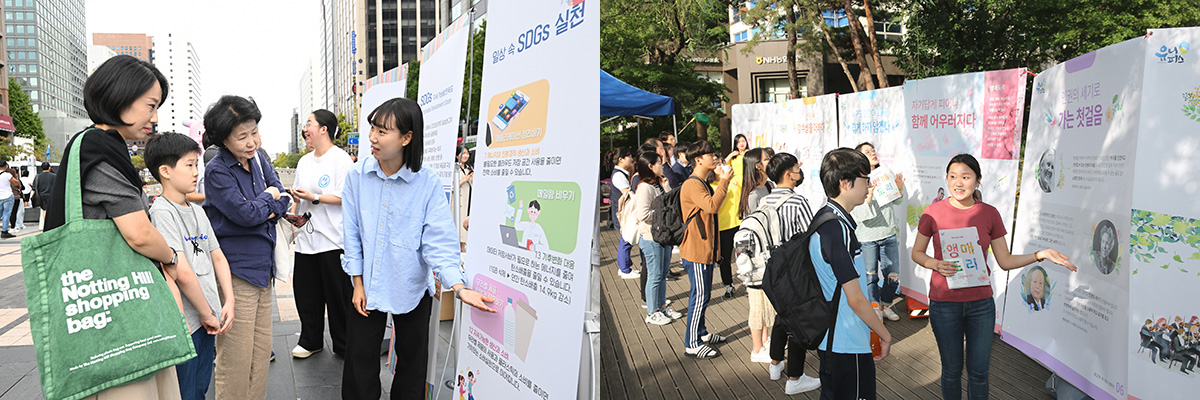
KSGI Student Division members present panel exhibitions inspired by Daisaku Ikeda’s peace proposals at university campuses and public parks across South Korea.
Kwon: Each year, the KSGI Student Division has taken proactive action for peace by creating panels based on President Ikeda’s Peace Proposals, displaying them on university campuses and in public spaces, as well as holding seminars. This is truly inspiring, and I also hope that among them, specialists will emerge who can tackle peace-related issues professionally.
Today, institutions that put Soka education into practice can be found around the world, and research centers dedicated to the study of President Ikeda’s philosophy of peace and education continue to emerge. I sincerely hope the number of such institutions will continue to grow, and I myself am giving serious thought to what I can do to contribute to that effort.
Looking ahead, I hope that young people who have studied President Ikeda’s philosophy of peace will further strengthen their bonds of solidarity and grow into leaders who can guide the world toward peace and stability.
Chan-ho Kwon is former vice president of Sangmyung University in South Korea. He has served in senior government posts in the Office of the Prime Minister and the Presidential Secretariat in South Korea and also as Consul General at the South Korean Consulate in Seattle, Washington. He studied political science at Northwestern University in the United States and earned his doctorate in political science from Chung-Ang University in 1996. From 2009, he taught at Sangmyung University, where he also held senior leadership roles, including provost of the Seoul campus and dean of the Graduate School. In 2023, he received the Order of Service Merit (Hwangjo Geunjeong Medal).
Share this page