Dialogue's Poetic Heart: Daisaku Ikeda's Ethos of Encouragement
by Sarah Wider
[The following is a talk given by Sarah Wider, Professor Emerita of English and Women’s Studies at Colgate University, USA, delivered at Soka University of America in Aliso Viejo, California, on November 4, 2025.]
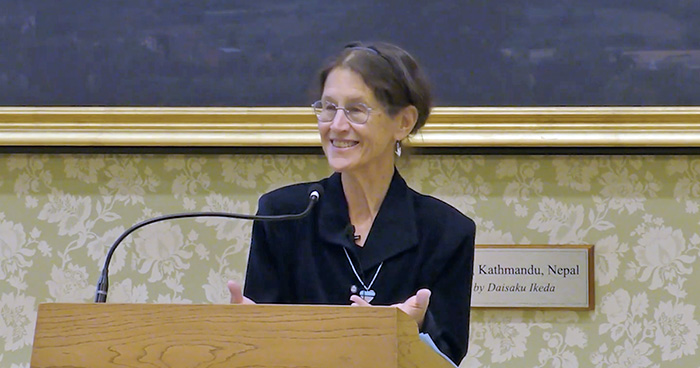
Sarah Wider, Professor Emerita of English and Women’s Studies at Colgate University, speaking at SUA
I begin with words from Walden, words that Daisaku Ikeda would have known well. In a chapter titled “Sounds,” Thoreau calls us into considered attention, deeply listening to the moment. He describes some of his best mornings at the pond. They contrast sharply with his Concord neighbors and even with his own internalized sense of what he “should” be doing. He tells us, “I did not read books the first summer; I hoed beans. Nay I often did better than this. There were times when I could not afford to sacrifice the bloom of the present moment to any work, whether of the head or hands.” There, in a nutshell—acorn most likely given the number of oaks that grew and grow in Concord—was what meeting President and Mrs. Ikeda embodied for me and what beautifully unfolded in subsequent dialogue.
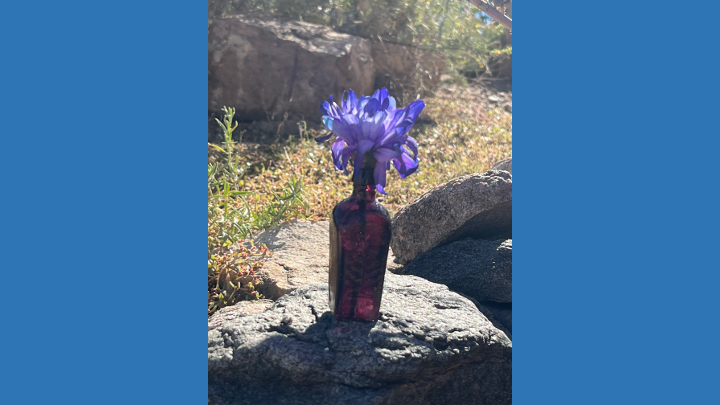
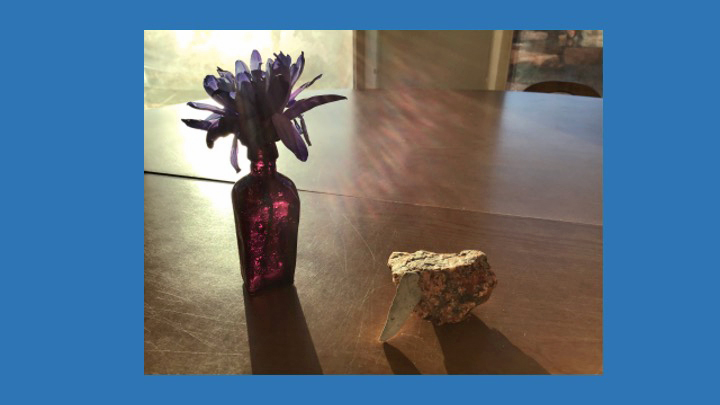
Attend to the present moment. Do not unwittingly, unthinkingly, distractedly sacrifice its bloom. And here is my first question for us all . . . for each of us individually and for all of us collectively: what is blooming in this present moment . . . yes, even in this moment where so much centers on destruction. What now is blooming that, in Thoreau’s phrasing, we cannot afford to sacrifice? Here, for your consideration, is a quick experiential rendering of Thoreau’s image. Recently, I participated in one of the No Kings Day marches around the world. There were so many; it was so heartening. I was in Santa Fe, and as we walked from the Federal courthouse through the centuries-old plaza and to the capitol building, a woman standing by the side of the road was handing out blossoms. “Here’s a bit of love,” she would say as she gave a flower to the person walking by. I put the stem of that bloom in the zipper pull of my jacket, and then later in my hair. It walked around with me all day, and I figured that by the time I got home it would be wilted beyond recognition. But no. There it was, still blooming in its lovely shade of purple. I put it into a small vase, and there it remained for several days, a vibrant, excellent embodiment of a present moment blooming, as you can see it here, still blooming for us now [, ].
Hold onto those thoughts about what is blooming in your present moments, as I take you on a thought-filled, wondering, wandering meander, reflecting on what insights and lessons emerged, what has bloomed from those present moments of July 3, 2006, and the dialogue with Mr. Ikeda, moments that might have been sacrificed to the lockstep of clock-time. When asked to reflect on meeting Mr. and Mrs. Ikeda, as well as on the subsequent dialogue, I thought about the qualities of mind and heart, observation, perception, and attention that characterized those events. I wanted you to experience what that moment of meeting as well as what the dialogue were like . . . not as something I would only tell you about, but as something that you too could feel in its inclusiveness and expansiveness.
Now I am a wanderer by birth, and never happier than when I don’t know where I am going, but I have learned over the years that many of us are not at ease with such unfettered musing and rambling, and so I also give you in succinct fashion some of the lessons from that time, messages that you will feel woven throughout the rest of these words. Here they are:
Be willing to be interrupted
Attend to the moment
In every moment, look always for what encouragement can be offered, especially when that moment may be one of interruption, even disruption.
What encouragement does this moment call for?
Now hold on tight because we are about to embark on an extended musing meditation, one which might seem out of place in an academic setting. But with you—with you as listeners here at a university that centers on understandings of interconnectedness, I trust your larger listening, your patience, curiosity and interest in seeing how all of this connects. As Mr. Ikeda said, “All phenomena in the universe exist within the context of mutually supportive relationships . . . in this view, nothing exists without meaning and nothing is wasted” (November 2, 1995, lecture, at Tribhuvan University, Kathmandu, Nepal).
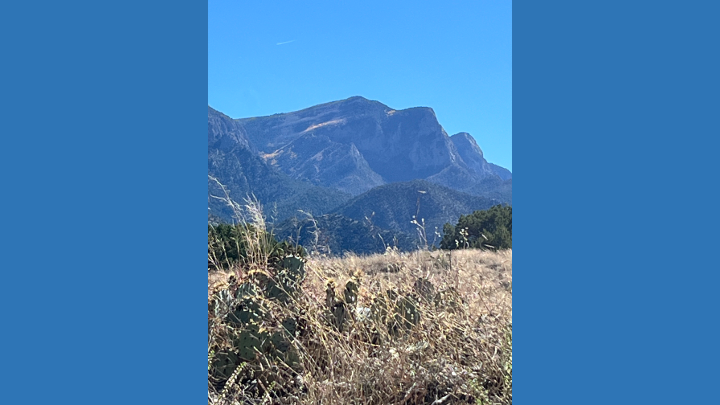
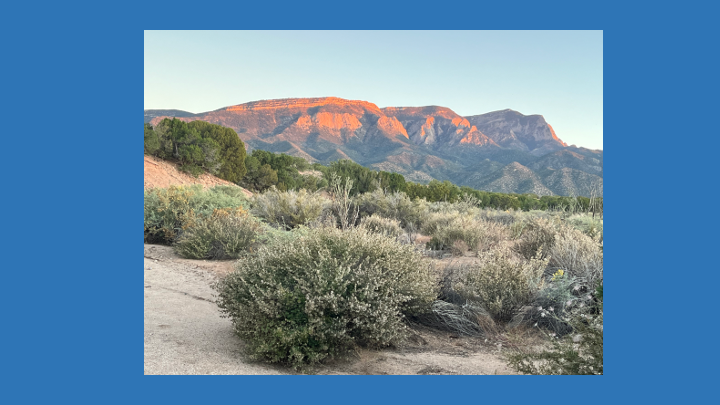
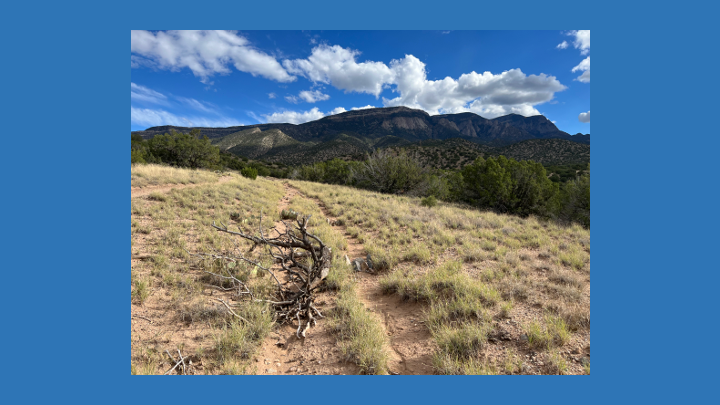
Writing this talk for you, I have been all over the place. In my Hamilton study, looking out the window to the maples, not intensely colorful this year given the uneven rain through spring and summer. Sitting here, as I am in this moment, at the beloved kitchen table of my childhood, a space where, as an adult, I would sit with my father in the morning. We would drink coffee, the New Mexico light coming in the windowed doors, talking about the world, where it had been, where it was now, solving all the dear world’s intractable problems and then getting up the next day and doing it all over again. Now that table no longer sits in my parents’ house, but in a small house in Placitas, New Mexico. From there, I look out the windows to the mountains. I am always looking to the mountains, even when there are no mountains around. How we need mountains in our lives. I am looking to the Sandias seeing a blaze of bright yellow from the aspens at the height of their fall colors []. And of course, I needed to include one of Mr. Ikeda’s mountain photos[1] []. And then again, the Sandias [].
At the same time, I am in a very different place—right here with you—standing here with such gratitude, recollecting my various visits to Soka University of America (SUA), thinking about Masao Yokota, who, after listening to a short talk I gave one summer at the Thoreau Society Annual gathering, did not sacrifice the bloom of that present moment, but wrote to me shortly after, beginning a conversation that has lasted more than 20 years and has indeed steadied and sturdied my life. At the same time, I am also elsewhere. No, I am not distracted, not inattentive, but embracing what I like to think of as Ikedean moments—what Daisaku Ikeda seemed always so readily able to do: be in this moment and also hold all the others, attend to this moment, and see how all these apparently disparate moments connect.
And so, even as we are all here, we are also at this moment together elsewhere. Let it be early, early morning in Albuquerque, New Mexico. We all are sitting at a booth in the Frontier Restaurant, right across from the University of New Mexico. I have just dropped my partner Bruce at the airport, and this restaurant is one of the only places open at 5 o’clock in the morning. It’s a big place. Over the years it has expanded up the block, adding storefront upon storefront as businesses came and went. At this early hour, there are only two rooms open. I sit facing the window, looking out at Central Avenue. It’s not yet busy. Over the restaurant’s speakers, soft guitar renditions of oldies are playing. Currently, it’s Elton John’s “Rocket Man” (1972), a song first popular when I was a high school student, and no driver’s license. Every Saturday, my dad drove my friend Ann and myself to the rehearsal space across the street at the university where our high school city orchestra rehearsed. Break time meant a dash over to Frontier for one of their famous sweet rolls. Elton John’s song could have been playing then, most likely the original. The rendition now coming over the sound system is an instrumental, guitar-only arrangement; yet the words of the refrain echo in my ears: “And I think it’s gonna be a long, long time.”
Yes, it has been a long, long time, and will continue to be. I look up from the page on which I am currently writing, thinking about that “long, long time” ahead until whoever that iteration of you and me and all of us will be is living in a peace and generosity-centered world. As Indigenous botanist Robin Wall Kimmerer says, “all thriving is mutual.” We know that, I like to believe, in our heart of hearts. That knowledge—that knowing—is the heart of encouragement. I think about mutuality, about the reciprocity in and of encouragement. I have so many examples from my own short life. My time on this planet has not been a long, long one; yet I bring deliberately to mind all the encouragement that brings me here today, part of a continuity flowing, flowing ever flowing, we believe, toward peace. That said, it has not been smooth sailing. In true encouragement, as Mr. Ikeda demonstrated time and again, one faces the struggles and enters them and aids in all the ways one can to end the cruelties and transform the violence. As many of you here know well, we do all we can to turn poisons into medicine. It takes a long, long time, and always those questions persist: how long do we have? How do we continue in ways that do not perpetuate the very violence we seek to end? As we hear so often and rightly so, gradual change readily becomes complicity with injustice. What happens in the meantime, during that slow persistent work illustrates just how mean a time it is. All the people who will be murdered, all the continued assaults on the planet itself. “It’s gonna be a long, long time”: and how do we live with that?
Here in Autumn 2025, I sit with my imagination—we sit, holding all these times together at once. The years unscroll and it is 1889. The University of New Mexico has only recently opened to students. More years unfold and the United States has only just taken over this land—a land it seems they will never honor or respect. Back the time goes, and now it is Mexico and then Spain, European nations claiming land that is not theirs, seeing only minerals to wrench from the ground, money to be made. Time continues to unspool in my mind, and here now are the original peoples of this land, people who remain integrally part of this sacred place where they have lived from “time immemorial,” as the saying goes: Isleta Pueblo to the south; Sandia to the north, reminding us outsiders what resistance and persistence and resilience look like. Different governments did all they could to murder them, empty them from the land, from history, from the vital presence they give to this place. It has not worked. Blessedly, it has not worked. As folks from indigenous communities often say, “we are still here.” One of my colleagues from Cochiti Pueblo used to remark to our students, “we were here long before the Spanish showed up; we were here during the Mexican government and the United States after them and will be here long after whatever government comes next.”
Now at this point, Time invites me to step back before human presence, to step into the time geologists call “deep,” time that seems beyond human comprehension—for example, this granite I brought with me and hold in my hand, dating its existence to more than a million years—1,453,000,000 give or take 12 million years—to be, well, not exact but mind-blowing.
Albuquerque—where I have imagined us being, where I grew up, what remains the home of my heart—Albuquerque daily illustrates how dynamic and dramatic are things humans often think of as monolithic and stationary. Take for example, the Sandia Mountains that border ABQ to the east. Five to ten million years ago, the land felt itself unsettling, and down went part and up went another to form these magnificent, now steadying, ever-present mountains, 10,000 feet above sea level at their peak. As I write at this moment, a day after that early morning coffee we were enjoying at the Frontier Restaurant, I see features that look as if they had always existed, as if the mountains had always been here, elemental to this land. And of course now they are, but they weren’t always. The rimrock at the top reminds us of a very different landscape, not landscape at all, but seascape. Here was an inland sea; if you walk the top of the mountains, you find fossils that were ocean creatures 300 million years ago. In addition to the granite, I also brought a sliver of limestone from the top of the mountain, and with close attention you can see the embedded shapes of those animals—that eons-ago moment speaking to this moment.
Moment: a word that usually means of short duration in time. It was only a moment, we say. And yet, that word also gives us momentous. The moment we see as slight is also the moment that holds all meaning in its slight frame. Mr. Ikeda emphasized the importance of attending to each moment precisely because moments pass, even the momentous ones. In our dialogue, he wove together the interconnectedness of our lives with nature’s interconnectedness. He called attention to the both/and of our experience: what is seemingly momentary, and indeed will end with the moment, can also endure. For him, that reality was at the heart of his practice and penchant for taking photographs. Here are his reflections from the dialogue:
“Just as each moment in our lives is unique, no two moments in nature are the same. Though flowers may seem to bloom in the same way year after year, in fact they are never the same as they were. What I see through my camera is an ever-changing, priceless world coming into being, then disappearing, moment after moment. I hope to capture this momentary beauty produced by nature and leave a lasting record. This, I believe, is what the art of photography can achieve—it’s with this intent that I take my photographs.” (The Art of True Relations, 41)
In every moment, there is such depth of years . . . all time present to us
If we listen
If we attend
If we remember to be all that we are
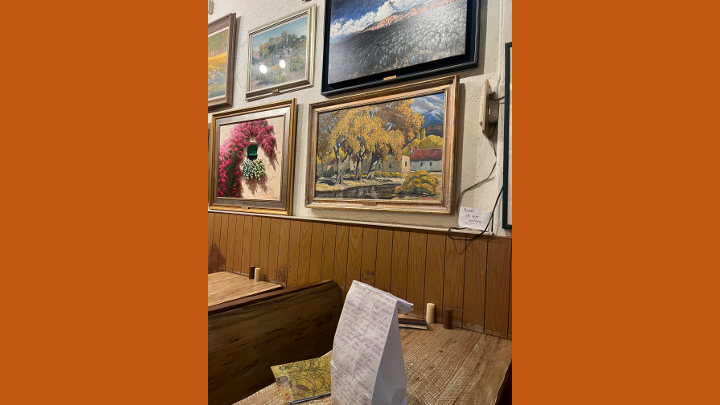
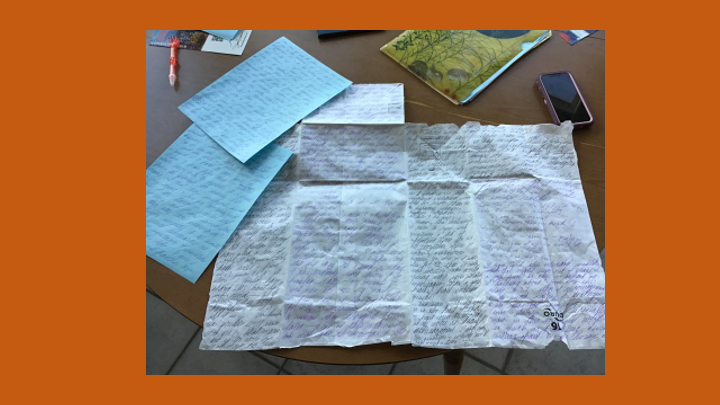
And here I pause, and chuckle over and chuckle with Time because 45 minutes have passed since I started writing the first of these thoughts for you. We are back in the Frontier Restaurant. I have run out of paper, as you can see in this photo. I am now writing on the white paper bag that will carry the sweet remnants of the cinnamon roll home with me [, ]. I have also run out of time as measured by how long Frontier’s free parking lasts. I pause to resume these thoughts for you later, and yet, at this moment, may we all take with us the older woman and the young girl I see walking past where I sit. A few moments ago, they were walking in the other direction, heading to the restroom. I noted them when they first walked by, carrying no food to a table, looking a bit disheveled as we all do at that time in the morning, and I thought nothing, although the backpacks stayed in my mind. As they walk by toward the door, it looks like they have washed up in the restroom, prepared themselves for the day; the girl’s hair is neatly combed into a ponytail; her clothes straightened. She looks ready for school. I wonder whether they are unhoused, living where they can, finding places to stay and then places to ready themselves for another day.
In so many U.S. cities, so many have no place to live; the expense of secure housing, as you know, is impossible on a minimum wage job. And those currently commandeering the United States government have decided to vilify them—human beings simply seeking some place in the world where they can live. I see this grandmother and granddaughter and think about the cruelty and the arrogance, the closed-mindedness and closed-heartedness it takes to use such vilifying tactics. What denial it requires to close one’s eyes to economic systems that are based on and in injustice. What lies it takes in order to maintain unequal power systems and unfair accumulation of money. I bring to mind one of the nineteenth-century greats, Margaret Fuller, who said, “Give me Truth. Cheat me by no illusion.” (Or, as she also suggested, that only cruel deeds require power; love accomplishes the rest.) How sorely we are missing the encouragement of Truth by those in power, the Truth that calls us to honor our interconnectedness and to offer the real, substantive encouragement that means no one goes hungry, no one is unhoused, everyone is acknowledged and supported to be the creative beings they are. There is Truth for all to embrace.
I think about what a friend of mine at Tesuque Pueblo has said, “you know, there is no homelessness at the pueblo. There is always a place, always someone’s home to go to and food to share, everyone is connected to everyone else in some way or another.” I carry these words with me daily, words from cultures centered in generosity, generosity not as an afterthought or an uncertain chance to share what’s “left over,” but as the place from where we always begin. To be human, to be in community, is to share. When that is not one’s behavior, some disorder has entered one’s being, lessening one’s very humanity. Cultures of generosity; communities of sharing: imagine that. That place where we all want to live. I bring to mind the words from the wonderful song “Crowded Table” by the women-led group “The Highwomen” with the lyrics: “I want a house with a crowded table and a place by the fire for everyone . . . the door is always open and everyone belongs.”
I pause in this extended meditation, cognizant that it is always good to look around, see where we are—and I take us back to the mountains—to think about what has brought us to this place in thought—and to imagine where we might go next []. Also to respect the reality that wants to know what the point of these reflections, these stories, these musings are. Whether your penchant is for clear direction or for unfettered meandering, we are all of us also trained in the “get-to-the-point-of-it” mentality. There is good to be said for such clarity, so long as it does not come at the expense of others. But I hazard that a “point” might be welcome at this moment/point, and so I ask, rather bluntly, of myself: what on earth is the “point” in these reflections? And my word, there is more than I can say now, so many layers to the full answer, but in short, how does this relate to Daisaku Ikeda’s ethos of encouragement or to the poetic nature of dialogue and its essential meaning in our lives, especially now in this moment, when so much is breaking, dividing, and pulling us apart? We are living in a time of rupture. There are no two ways about that. I look and see all that has been broken in the last quarter of a century, the century President Ikeda envisioned as a century of peace. Where are we now—
As many as 4.5 million people killed in war-related violence since 2000
More than 900,000 people killed by gun violence in the U.S. alone
Civil Rights legislation gutted
In the United States and elsewhere, we see vilification of any whom the current regime decides to demonize: those who are not “white enough” or cruel enough or threatening enough. We are living in an age of cruelty masking itself as toughness and strength. It can only imagine power through violence. It missed out on some crucial part of life’s teaching, that power comes from a word that means possibility, the same word that gives us potential—a meaning that Daisaku Ikeda knew so very well and embodied in all his words and actions, a vital meaning that so many government leaders seem never to have learned at all.
I don’t need to rehearse for you how bad it is—you know, we all know the ruptures. We see them around us each day and we feel those breakings within our very being. We are rent, broken, torn, taken to pieces . . . and so, what do we do, what do we do with all these pieces, fragments left to us by violence? How do we take these poor dear, hurting pieces and peace them together into a new pattern, a different path, piecing them into peace? Sometimes I just absolutely love the English language—that the word that means a part, a bit, even a fragment sounds the same as the word that names the way of being in the world where generosity, creative possibility, interconnectedness are the guiding lights. From “p i e c e” to “p e a c e” in each moment, every moment.
What is this moment calling us to hear? To see? To hold? To do?
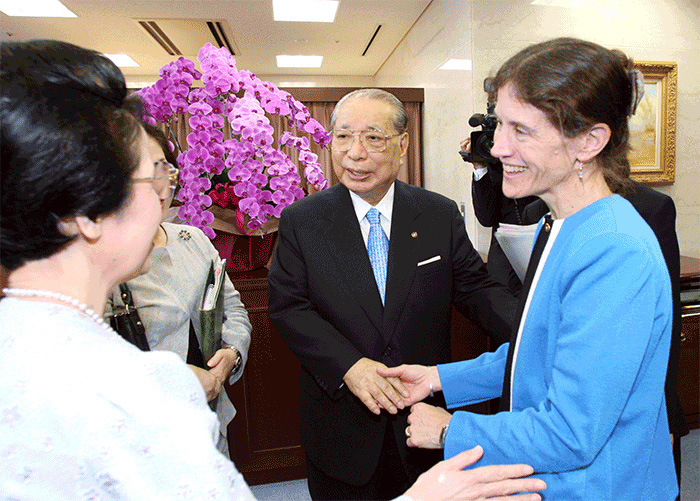
Professor Wider with Mr. and Mrs. Ikeda (Tokyo, July 2006)
Nearly twenty years ago, July 3, 2006, I stood in a room radiant with light. As I inquire of my memory, however, I doubt myself. That radiance did not come from a spacious window or artificial lighting. I was in a corridor, a nice enough space, all things considered, but with no large windows or outdoor source of light, a space that some might dismiss as just a passageway, not meant for stopping or giving attention to, meant only to travel through. However, in this case, those who had created this space did not see it as insignificant or as a dismissible means to a “more important” end. Transitions matter, and this place designed for transit had been carefully attended to: one of Mr. Ikeda’s photos in large format hung on the wall and a beautiful array of flowers adorned a pedestal. There was beauty in that passageway, light waiting to radiate to anyone who stopped long enough to see, light created by the moment, within that moment. President Ikeda had just received an honorary degree from Maejo University in Thailand. Technically, he had no time now to speak of. I am sure his daily schedule was tightly packed with back-to-back appointments, measured, I would wager, almost down to the second. But somehow, he found time, took time, made time to meet a visiting Transcendentalist scholar from the U.S. His staff opened 15 minutes in his schedule. He allowed himself to be interrupted. He opened and saw possibility in this rupture, and so there we stood—Mr. Ikeda, Mrs. Ikeda, myself, Mr. Yokota, the wonderful interpreters without whom none of this would have been possible, other staff members—standing there together conversing. There he was acknowledging my work as a teacher and thinker, acknowledging that work as essential for weaving the fabric of peace. We were—we all are—weaving things together all the time.
At that time, I was . . . well not quite unraveling but a bit pulled apart. My parents had recently died. I no longer had my beloved family home to return to in Albuquerque. The genetics that gifted me with an amazing sensitivity to the world had also gifted me with chronic migraine and vertigo, and I was—and always am—still learning how to live now in this body, to attend to and be in whatever the moment brings, whether pain or joy. At work—well, I loved teaching; I loved working with those in my classes, introducing them to mind-blowing essays and poems and stories so that we might think together about what matters most in this world. My pedagogy was eccentric to many of my colleagues—student-centered, fluid, allowing the moments in class to shape what we thought about together that day, where we would go. We were never on a linear point A to point B path; we were always circling, spiraling, connecting. Little wonder that I gravitated to contemporary Native American writers. As Leslie Marmon Silko says, “Pueblo expression resembles something like a spider’s web—with many little threads radiating from the center, crisscrossing one another. As with the web, the structure emerges as it is made, and you must simply listen and trust, as the Pueblo people do, that meaning will be made.” (“Language and Literature from a Pueblo Indian Perspective”)
My mother had long encouraged me to think about, see and trust interconnectedness. “It all connects,” she would say. But I was in academic settings that celebrated analysis—taking things apart, not seeing how intricately interrelated they all were. The academic’s goal was to be incisive—a word that literally means to cut into. To cut into and then speak authoritatively, almost it seemed, authoritarianly. That was not me. I had learned to do that but doing so broke my heart, and so I persisted in a different way, that often meant I felt quite alone in my work. But now I was standing with President and Mrs. Ikeda, being seen as a coworker for peace, valued for the lively interconnectedness I perceived and sought to share in class, in conversations, in writing. That moment, lasting less time than it has taken me to write these words, did not so much change my life as enable me to embrace a way of being I always knew to be true. And thank you, Mom, thank you ancestry, thank you land, sky, water that always always, always paved my way with connection. That way had been torn from me and at some moments perhaps even schooled or worked out of me, but there I was reconnecting with this fundamental reality of all existence. Nothing is isolated. Nothing is by itself, solely for itself. In that moment with the Ikedas, I could have quoted a line of poetry I am sure they knew well, from Ralph Waldo Emerson’s poem “Each and All”: “All are needed by each one / Nothing is fair or good alone.” I could have shared Silko’s opening section from her book Storyteller. She writes, “and it is together, / all of us remembering what we have heard together / that creates the whole story / the long story of the people” (7). Those thoughts, those writers were present within us in that moment. And so too were you—yes, all of you here, even you who were not yet born or just scarcely born—you were, you are there too.
In that moment in 2006, I had no idea I would stand here now, sharing these reflections, but as my dear mother said, it all connects. And as the subsequent dialogue with Mr. Ikeda taught me, a dialogue is nothing if it is not inclusive—inclusive of as many thoughts as can be imagined, as many writers, artists, musicians, places, times, people. Dialogue holds all of this, and is no dialogue if premised upon an exclusion that says, “stay on topic; follow only this line of thinking.” Mr. Ikeda and I certainly didn’t. We too were all over the place, bringing in so many authors, so many artists, so many musicians. Working on that dialogue felt like we were part of an eons-old conversation—yes, of course, with those voices from, the past—Margaret Fuller, Goethe, Queen Shrimala, Whitman, Menuhin[2]—but also with the places we knew well. For Mr. Ikeda, that meant the area where Soka University of Japan was built and also right here at SUA, the careful attention to place; how to respect that place and through that respect, create a place where all come together to learn. Informing the beauty he so wanted to see embodied all around every learner of every age, there were other places: the devastated warscapes in Japan, the violence-wrecked land and people within which he became a young man. I think about the fact that for you students who are here now, you are essentially the age he was when he faced a world violently disrupted. Thanks to the mentorship and encouragement of Josei Toda, he turned away from violence, walking always the path of peace, piecing it together as he went. As might be expected, the places that came vitally to mind for me were gentler spaces even in their ruggedness and strength: the Sandia mountains, the vibrancy of New Mexico blue skies as well as the endless variations of greys in the clouds so characteristic of Hamilton, New York.
From the beginning, I felt the inclusiveness of dialogue so warmly, strongly, and beautifully present. In part, this occurred because our words were almost immediately serialized, released soon after we wrote them. Our dialogue appeared first in the Japanese women’s magazine Pumpkin before it was published in book form (Mrs. Imamura and her assistant, Ms. Higashiyama). I have met some of those original readers and treasure the friendships that have grown as we dedicated ourselves to continuing the dialogue . . . so many wonderful friendships. Thanks to this dialogue, I have woven—we—have woven fabrics of friendship that are indeed fabrics of peace. We always keep weaving, weaving what will hold us together in a world breaking to pieces. We continue, weaving steadily, all of us together, so that the world of generosity, kindness, mutuality, and trust may emerge.
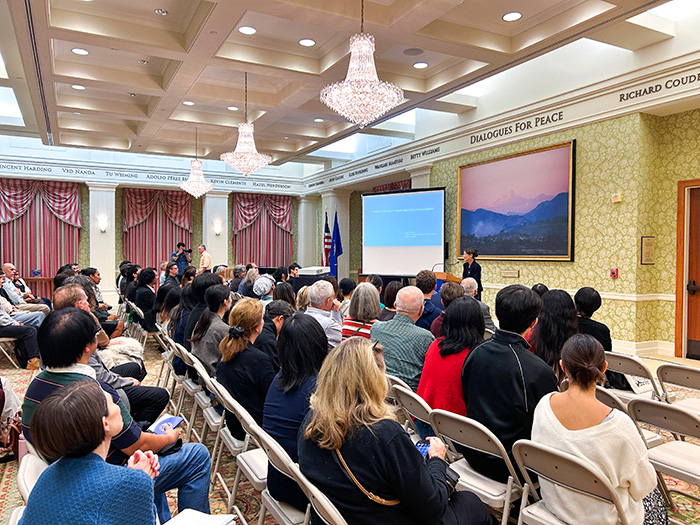
Professor Wider delivering “Dialogue’s Poetic Heart: Daisaku Ikeda’s Ethos of Encouragement” at SUA (Aliso Viejo, California, November 4, 2025)
Honoring that inclusivity, I turn to you with questions, offering us a bit of reflective time before the more usual Q and A. I center questions, questions for us all. As I saw for President Ikeda and certainly for myself as well, there is nothing more exciting, nothing more world opening or filled with potential and encouragement than a good, hearty, heart-centered question. By the way heart literally is at the heart of encouragement: the French word “coeur”—the word for heart—right smack dab at the center, the very heart of the word encouragement itself. And so, in the spirit of encouraging heart-centered questions, I return to where I began with Thoreau’s affirmation of the present moment and of not sacrificing its bloom. I blend this with the profoundly important work of encouragement and ask you, in these next moments to think about what blooms you have encouraged or are presently encouraging others not to sacrifice. Think about who has done the same for you. Then take it further, that necessary and all-important step, and brainstorm ways of encouraging generosity in our every moment. What ways do you see, and indeed have you already seen, to encourage us always to center generosity in all that we do.
And so, I invite us to take a few minutes and reflect on whichever of these prompts speak to you most resonantly now; although of course, I also encourage you to follow your own heart in its present musings wherever those lead. Jot down a few words, draw a picture of your thought-feelings, whatever suits. I’ll keep these prompts on the screen, and will call us back in a few moments [, reproduced below].
“I could not afford to sacrifice the bloom of the present moment.”
Henry David Thoreau
What blooms have you encouraged others not to sacrifice?
Who has done the same for you?
What ways have you seen that center generosity in all that we do?
Brainstorm ways to encourage such generosity in every moment.
Sarah Wider is Professor Emerita of English and Women’s Studies at Colgate University in Hamilton, New York, and former president of the Ralph Waldo Emerson Society. A scholar of the American Renaissance, her work focuses on thinkers such as Ralph Waldo Emerson and Henry David Thoreau, as well as American women writers of the late nineteenth and early twentieth centuries and Native American literature. A noted Transcendentalism scholar, she is the author of The Critical Reception of Emerson: Unsettling All Things (2001). Her scholarship explores literature’s ethical, imaginative and relational dimensions. Professor Wider collaborated with Daisaku Ikeda on a dialogue serialized in the Japanese women’s magazine Pumpkin from 2009 to 2011 and later published as The Art of True Relations: Conversations on the Poetic Heart of Human Possibility (English edition, 2014). She also contributed to Encountering the Poems of Daisaku Ikeda (2015).